R
Read the Room
Know who is in the room, what they care about, and what must never be said in front of them.

An animated, research-informed course on the small habits that quietly cost customer trust, and what to do instead.
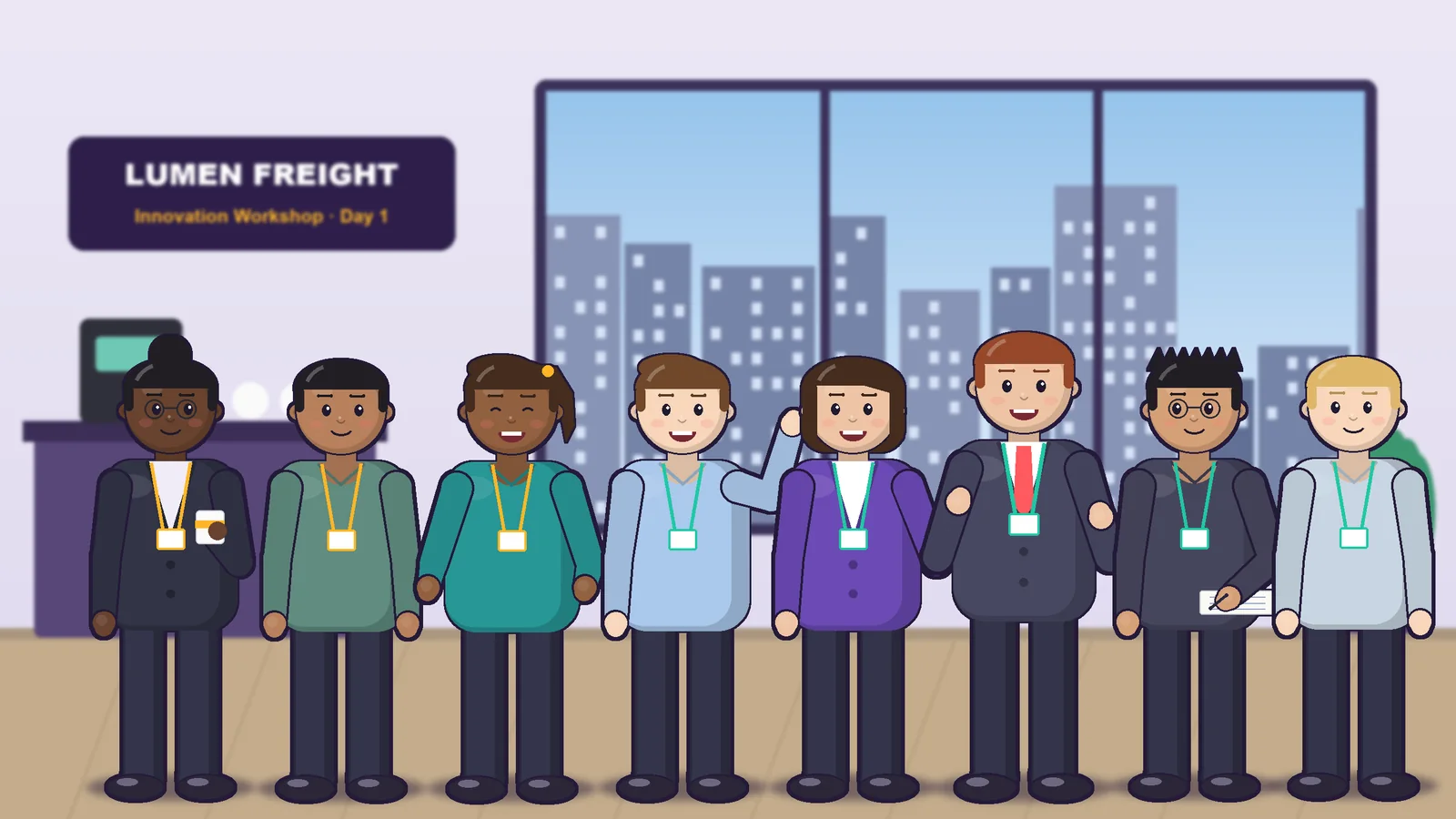
Every one of these happened in real customer meetings in a single week. None took more than five seconds. All of them are habits you can change.
The Meeting Room
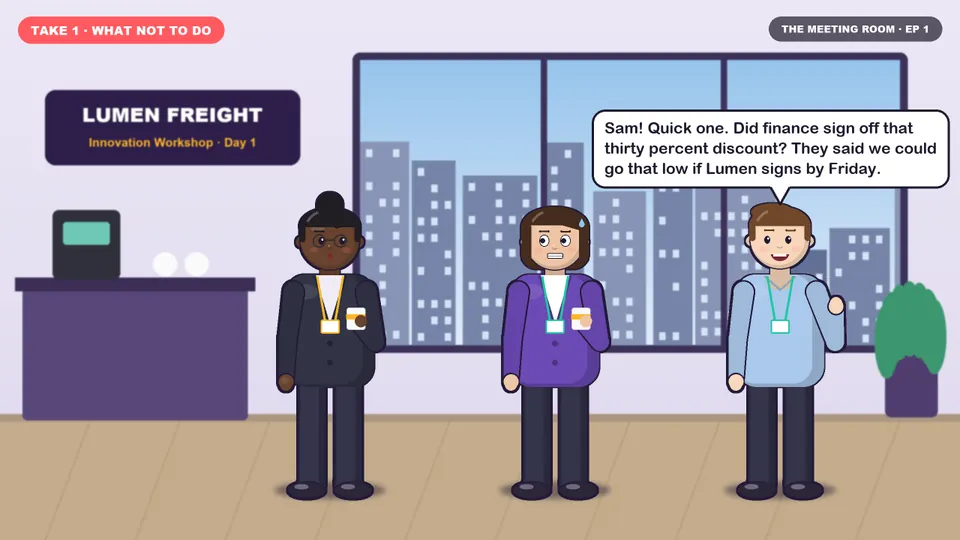
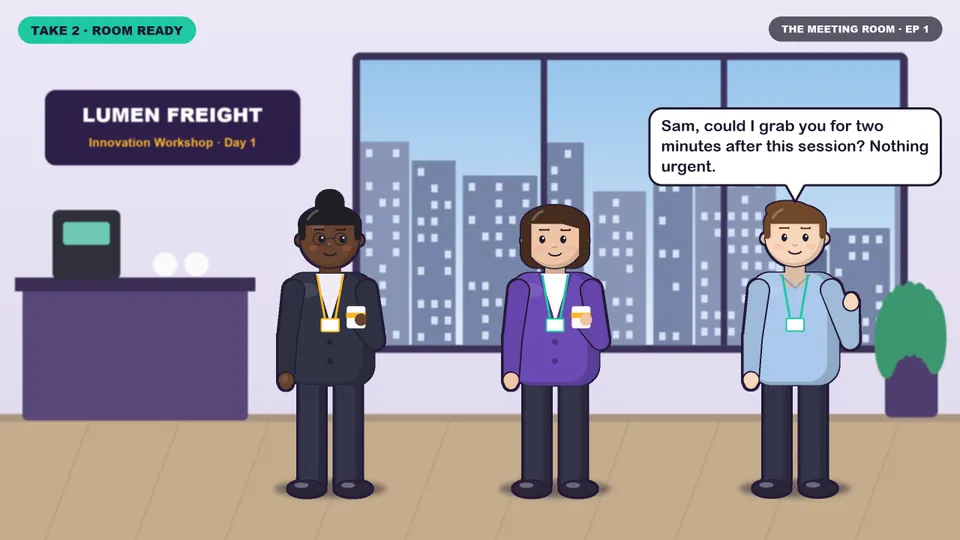
Five short animated episodes. Each one plays the fail, freezes on it, rewinds, and replays the moment the Room Ready way.
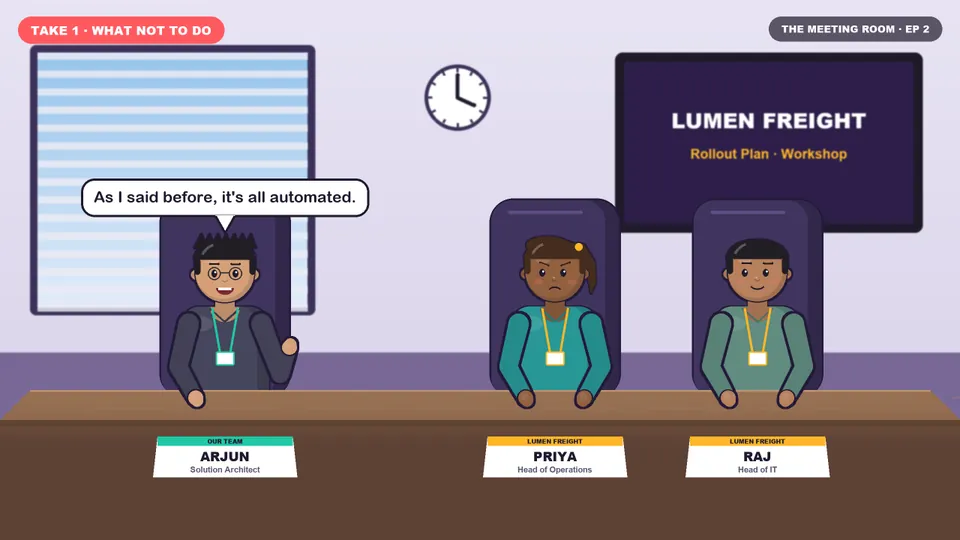
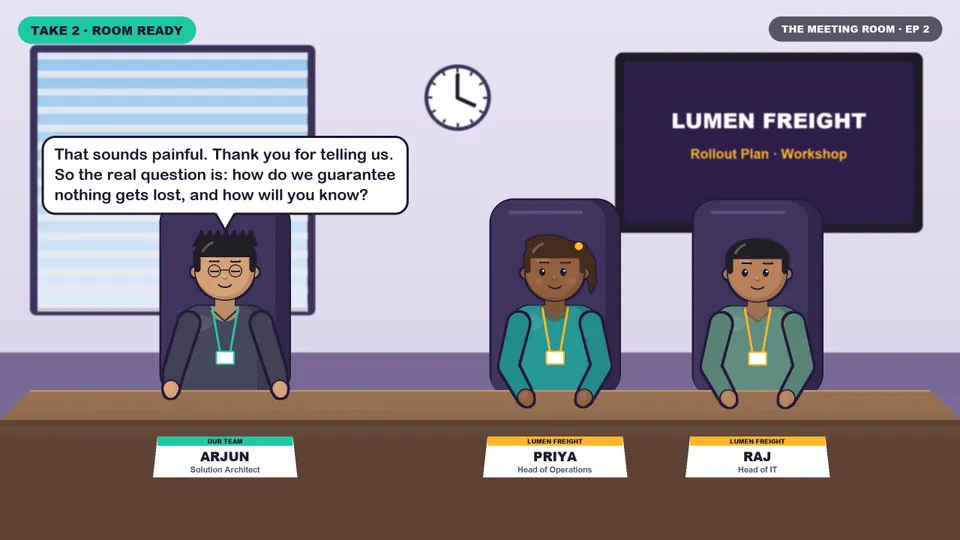
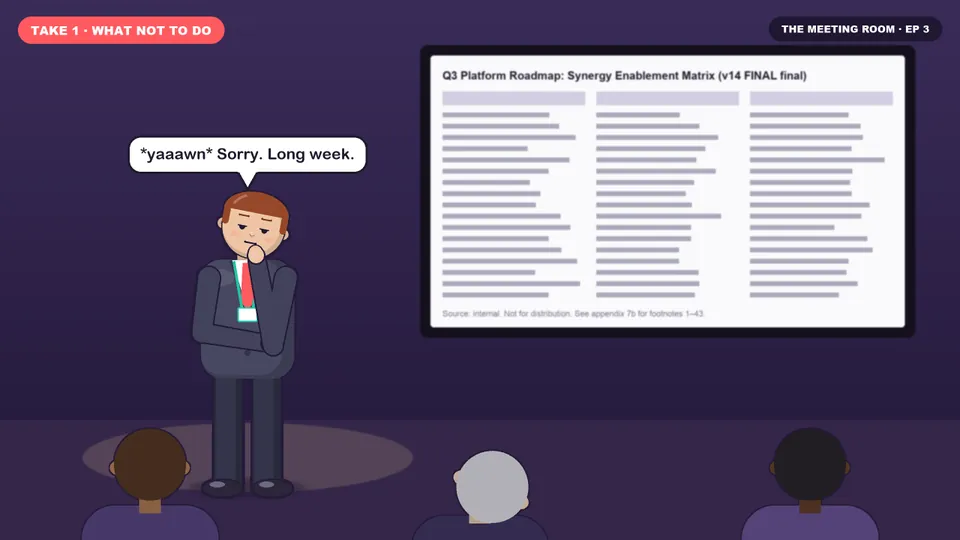
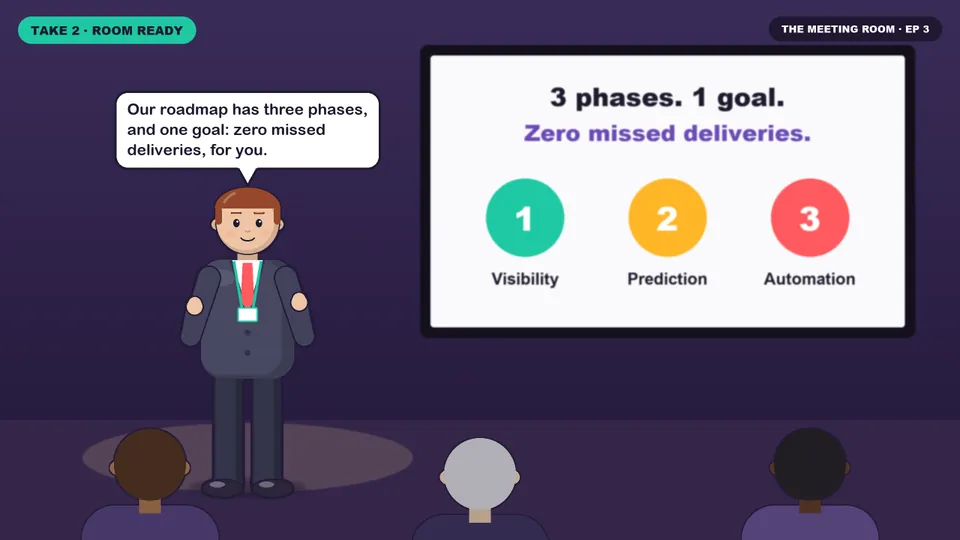
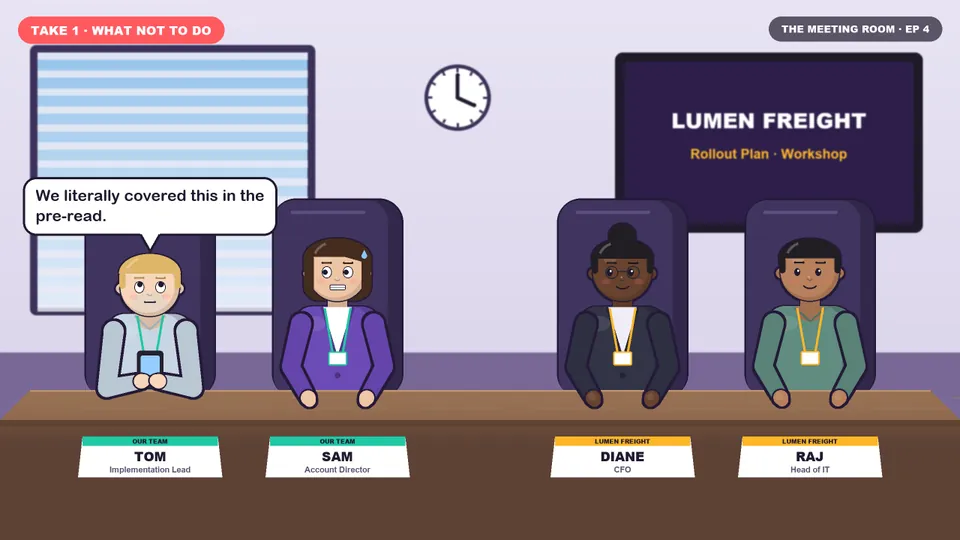
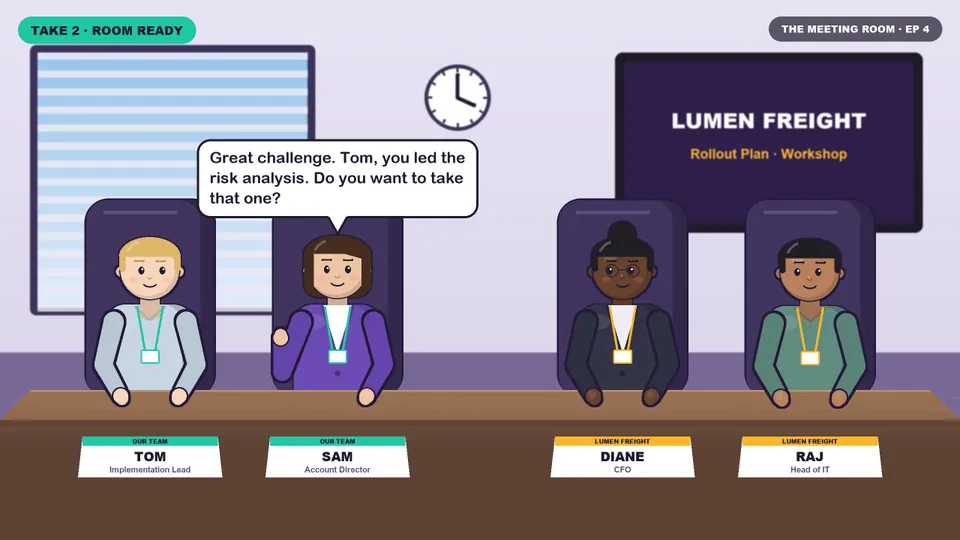
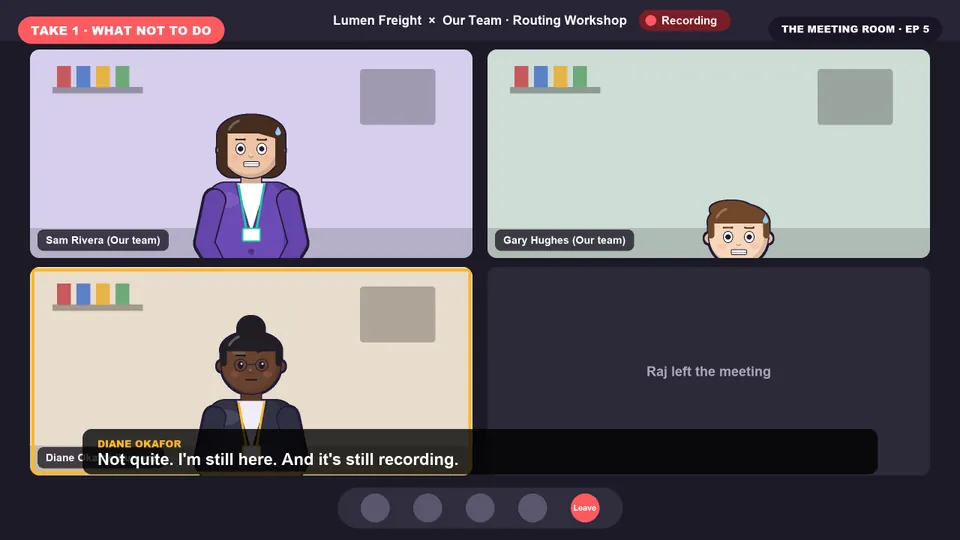
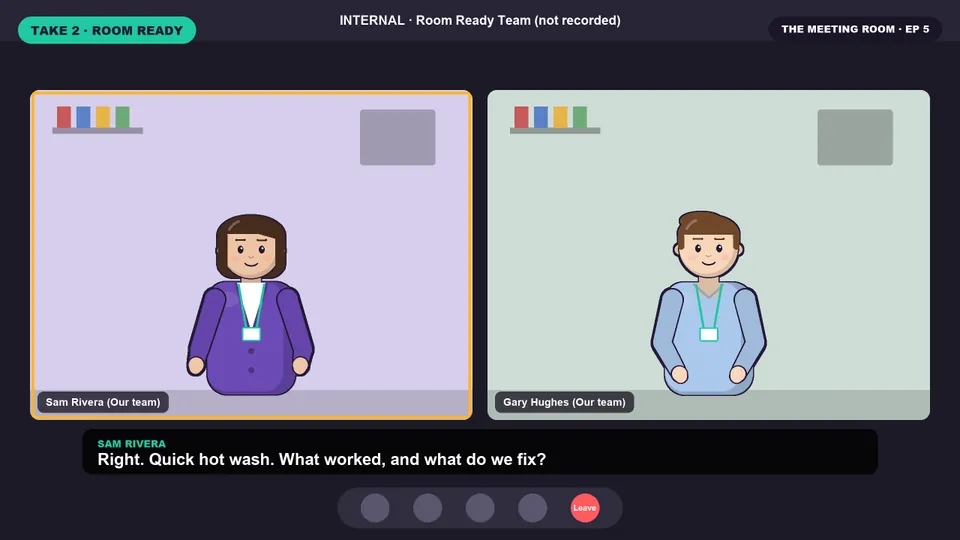
One simple model holds the whole course together, so people remember it in the corridor, not just in the classroom.
Know who is in the room, what they care about, and what must never be said in front of them.
Your face, hands, posture and energy tell the customer whether you want to be there.

Let customers finish, check you understood, and visibly back your colleagues.

Make customers feel respected. Never corrected, rushed or talked down to.

Emotional intelligence holds the walls up: notice how people feel, including you, and respond rather than react. Plus a full module on virtual and hybrid rooms, where every habit is magnified by a camera.

The course draws on peer-reviewed research, plus some theory and industry surveys, and grades each source for strength. Where popular advice is wrong, we say so.
When clinicians asked patients about their concerns, patients were cut off after a median of 11 seconds; those left to finish needed a median of 6. We use this clinical finding to practise letting customers finish.
Singh Ospina et al. (2019), Journal of General Internal Medicinestudies in one meta-analysis found emotional intelligence can be trained, with moderate gains, especially when people practise and get feedback.
Mattingly & Kraiger (2019), Human Resource Management Revieweffect sizes link feeling listened to at work with better relationships and job performance.
Kluger et al. (2024), Journal of Business and Psychologyexperiments showed customers who watch staff be rude to each other judge the whole company more harshly.
Porath, MacInnis & Folkes (2010), Journal of Consumer Researchcorrelation between emotional intelligence measures and job performance across meta-analyses. Separately, managing emotions predicts performance most in emotionally demanding jobs.
O'Boyle et al. (2011); Joseph & Newman (2010)Mehrabian's 1967 studies concerned liking, judged from single words when tone and words conflicted. The result does not generalise to communication overall.
Mehrabian & Wiener (1967); Mehrabian & Ferris (1967)A 200-person replication found no hormone effect. What holds up: slumping lowers how confident people feel. So don't slump.
Ranehill et al. (2015); Elkjær et al. (2022)People average 54% accuracy, barely above a coin toss. Room Ready teaches you to read the room, not to read minds.
Bond & DePaulo (2006); DePaulo et al. (2003)The full Evidence Brief, included with every purchase, grades each source as strong, moderate, emerging, theory or survey, and explains its limits. Room Ready itself has not been evaluated in these studies. No vendor statistics, no "90% of top performers" claims.
Room Ready Solo. Work through it in an afternoon, use it for a career.
The Team Kit adds everything a manager or trainer needs to run it in-house.
Launch pricing
Introductory price until 24 January 2027, then $29.
For one person who wants to be the best in the room.
Optional at checkout: Room Ready Scripts, 30 word-for-word lines for the hardest moments, +$9.
Introductory price until 24 January 2027, then $697.
Run it in-house for up to 50 people a year.
Want a live launch led by a Room Ready facilitator? See the Kick-off bundle and break-even calculator.
Delivered live, virtually or on site, and tailored to your customers.
Launching Monday 11 January 2027. Prices in US dollars. Our checkout partner acts as merchant of record: UK and EU VAT or US sales tax is added where it applies and shown before you pay. Buying for a team? See the business case, add-ons and break-even calculator.
Watch Episode 1. Run the 60-second Room Check before one real meeting. If it doesn't change how that meeting goes, ask within 30 days of purchase for a full refund. It covers every product and add-on; for live services, the 30 days start on the session date. No forms, no awkward questions, and your statutory rights are unaffected.
No. Body language is one wall of four. Room Ready also covers discretion, listening, language and emotional intelligence, and it busts popular body-language myths.
The videos take about 15 minutes. We estimate the core material takes an afternoon, followed by the 30-day challenge. The team workshop runs for three and a half hours.
Often, yes, depending on your employer's policy. It is professional development for customer-facing work. Your checkout receipt can support an expense claim, and we include a short email you can send your manager for approval.
We're careful about it. The course draws on peer-reviewed research, plus some theory and industry surveys, and the Evidence Brief grades each source and explains its limits. Room Ready itself hasn't been tested in these studies, and where the evidence is thin or contested, we tell you.
That is exactly what the Team Kit is for. It includes the full workshop deck, facilitator guide, print rights and job aids for up to 50 people a year.
Solo learners never have to. In the team workshop the games are short, low-stakes and done in small groups. Nobody gets put on the spot in front of the whole room.
Videos are MP4, the deck is PowerPoint, the guides are Word documents you can rebrand, and the quiz runs in any browser, offline.
No. It is for anyone a customer can see or hear: success, delivery, consulting, engineering, support and leadership.